Troubadour Obscura

20170716_211032.jpg

Troubadour Obscura with branded glass. Copyright 2017 by Andrew Dunn.

One thing I love about Belgium is that the brewers there are not afraid to try out styles that are less commonly thought of as “Belgian styles.” Yes, there are many Belgian styles. But there are also styles that originated elsewhere that the Belgians also excel in.

Over the years, I have sampled Belgian lagers, stouts, porters, IPAs, and Scotch ales. Belgian craftsmanship often shines through no matter what you are drinking. However, they almost always have a distinctive Belgian flavor.

Stouts are particular favorites of mine, outside of my usual Belgian styles. While in Bruges, Belgium, I came across Troubadour Obscura. The Musketeers Brewery in Ursel, Belgium, describes its brew as a “mild stout.” Color me intrigued.

Smell: The aroma is butterscotch and caramel.

20170716_211124.jpg

Troubadour Obscura poured into a branded glass. Copyright 2017 by Andrew Dunn.

Sight: The beer pours mahogany with a tan head.

Taste: Troubadour Obscura has a deep, sweet malt flavor. The taste is warm and smooth, but not scorched. You get candied sugar with an accent of hop bitterness.

Alcohol: The bottle said 8.2 percent alcohol, but it sure felt a lot boozier than that.

Overall: This is a wonderful brew.  This is the kind of beer one can sip on into the wee hours of the night with friends in a dark pub, sharing good stories or a song, just like a troubadour would.

Bottom line: You can find most Troubadour beers for a few euros in Belgium. Going to be harder and more expensive to find in the United States. But it is worth a try.
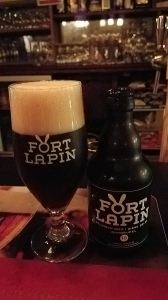
Fort Lapin 10

20170716_203909.jpg

Fort Lapin 10 with branded glass. Copyright 2017 by Andrew Dunn.

Spring break is here in East Tennessee, which has mercifully allowed me some time to actually work on this blog.

In discussing a future honeymoon to Belgium some friends plan to take this summer, I thought about some of the great beers we sampled on our own trip. What amazes me still is the wide variety available.

Dark sweet brews, bright sour lambics, tasty hop bombs. Any beer lover can find something appealing.

As I have mentioned, I tend to skew to the dark side (of beer). Quads or Belgian strong darks are specifically my favorites. So while I cast a wide net in Belgium, I was always looking for the big ones.

Fort Lapin is a small brewery run in Bruges, Belgium, which is where I sampled the brewery’s quad, Fort Lapin 10.

Smell: The nose is malty and yeasty, but it’s not a strong smell.

20170716_203954.jpg

Fort Lapin poured into branded glass. Copyright 2017 by Andrew Dunn.

Sight: The beer pours dark brown with a big lacy beige head.

Taste: Fort Lapin 10 has a heavy roasted malt flavor. The character is much more similar to a porter or stout rather than a quad. There are some herbal notes as well.

Alcohol: Well, the alcohol is 10 percent as the name would suggest. But the taste isn’t too heavy on the booze.

Overall: I’m less wild about quads that are roasty like this one. I can’t say I would get it again.

Bottom line: You can find a Fort Lapin for a few euros.

Cherry Chouffe

20170716_211219.jpg

Cherry Chouffe in a branded glass. Copyright 2017 by Andrew Dunn.

Rare beers and special beers and one-off beers are always fun to find. My wife and I found many while on our trip to Belgium.

Most brewers have a cadre of suds they produce on the regular. Building a business is hard without producing a few favorites. But most brewers will also experiment, mixing and matching ingredients, barrel aging brews, or spiking the batch with a particular flavor.

One ingredient the Belgians excel with is the cherry. Tart krieks (sour cherry lambic beers) have long been a Belgian favorite. But sour is not the only route one can go.

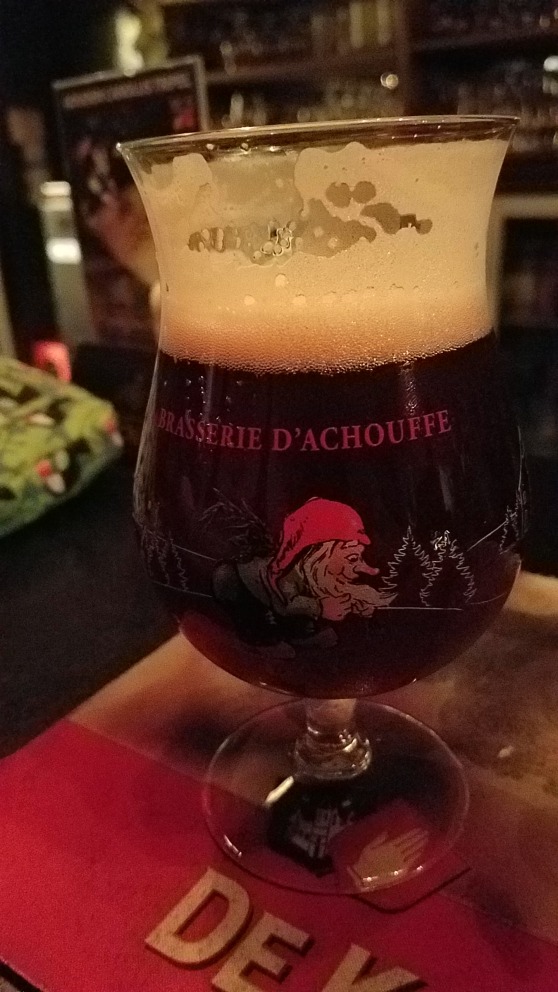
Brewery Achouffe, in Achouffe, Belgium, brewed a special Cherry Chouffe this year, which is their McChouffe Scotch ale brewed with cherries. The wife and I were able to sample it on tap at ‘t Poatersgat Cafe (The Monk’s Hole) in Bruges.

Smell: You are hit with a wonderful cherry vanilla smell.

Sight: A deep purple color to the beer with a raspberry beret of a head.

Taste: Sweet cherries, obviously. Bright, lively, lovely. The beer is like biting into a fresh cherry. Drinking the beer is like drinking sparkling cherry juice.

Alcohol: Cherry Chouffe is deceptively light. Those mischievous gnomes have spiked this beer with more than cherries as it clocks in at 8 percent. Watch out!

Overall: We thought it was amazing beer. We both remember it quite fondly. However, I will say, I already know it will not be for everyone. It is a sweet beer. Some might say it is far too sweet to enjoy, perhaps verging into the artificial, cloying, candy range. But we really enjoyed it. Each to their own. But this is NOT a kriek, not a sour lambic. It is a rouge (red) fruit beer. So keep that in mind. Also, we sampled it on tap. The flavors may be different in the bottle.

Bottom line: The beer was only a few euros. Well worth it in our minds.

Grimbergen Dubbel

20170716_182459.jpg

Grimbergen Dubbel in a branded glass. Copyright 2017 by Andrew Dunn.

Well, here it is, the end of November, and I am finally posting to this blog. My semester has been an insanely busy one. I’m teaching an extra class, prepping a new class, and serving on a number of committees.

That has left me with little time or energy to write. But Thanksgiving, the U.S. holiday devoted to turkey, football, and counting our blessings, has just passed. That means the winter break is very close. My goal is to get caught up on this blog before the new year.

Thanksgiving and November always put me in the mood for spicy dark ales. I try to drink my favorite Belgian strong darks at the feast. Dubbels and quads are always my go-to brews for big meals.

On our summer trip to Belgium, my wife and I dined in a nice restaurant in Bruges not far from our hotel. The meal that night was hearty as was the beer, Grimbergen Dubbel.

Grimbergen is named after the Grimbergen Abbey in Grimbergen, Belgium, which dates back to 1128. The abbey has been destroyed and reborn a number of times, which is why the monastery and the beer both use the phoenix as their symbol.

The recipe, which originated with the monks, is now brewed by the Alken-Maes Brewery in Alken, Belgium. Grimbergen now comes in a variety of styles. The double is one of the oldest.

Smell: Metallic flour smell. Yeasty to the nose.

Sight: Rusty mahogany. The beer pours a thick and rich tan head.

Taste: Grimbergen is a sweet double. But it isn’t heavy on the dried fruit. Instead, it has a really nice smooth Bananas Foster vibe. I was worried about a possible metallic flavor, but there was none.

Alcohol: Grimbergen Dubbel weighs in at 6.5 percent. But it didn’t have much of a burn to it.

Overall: I really dig this one. I like my doubles on the sweeter side. And this one delivers. But it doesn’t move into a quad, which makes it distinctive. It remains a true and tasty double.

Bottom line: The beer was only a few euros. So definitely worth a try if you find it.


Bourgogne des Flandres

20170716_174406

Bourgogne des Flandres in a branded glass.

The Belgian Beer Bureau is back from its Benelux-European tour, and it was everything we hoped it would be. Not only did we enjoy some wonderful beers and food all over Belgium, but we also got to mix it up with the locals, making friends along the way.

In fact, every day we were in Belgium, someone bought us a beer. How much better can it get? We are true Belgofiles now.

Our first stop was in the beautiful medieval town of Bruges in Flanders, the Dutch-speaking part of Belgium. And our first stop in Bruges was the Bourgogne des Flandres Brewery.

The beer, a Flemish Red, is one that has been around since the early 1900s and was originally brewed in Bruges. The original brewery closed in 1957. The brand was bought by Brewery John Martin, which reopened a brewing facility in Bruges in 2015 just for Bourgogne des Flandres.

Smell: The aroma is like an orange vinaigrette. Not quite the malt vinegar smell like many Flemish reds.

Sight: As advertised, it has a nice reddish brown hue. There is a nice fluffy cream head on top. A pretty beer.

Taste: Bourgogne des Flandres is light, sweet, and very fruity. There is a bit of a copper/mineral tastes. Surprisingly,  the beer is only slightly tart. I found it to be a really easy drinking Flemish red. The flavor has none of that malt vinegar taste.

Alcohol: At 5 percent, the booze is hardly a factor.

Overall: I actually like this beer a lot. I am not a big fan of the Flemish red, but this one is very easy to get into. Some may find it too accessible or not complex enough, but I enjoy it.

Bottom line: Well, we took a tour and got the beer for free. But you can buy a pint of it locally for about $4 to $5. However, this one is not readily available in the United States.


Gnomegang

20170704_120015

Gnomegang with a tulip glass. Copyright 2017 by Andrew Dunn.

Life has gotten in the way of this blog, badly. I am again two months behind in posting. But I have taught two summer classes, taken care of some personal obligations, and gone through a small last-minute travel crisis.

That last one was a killer. Less than a month away from our big trip to Belgium, obviously a big deal for this blog, and I noticed that my passport had a big rip in it on the signature page.

The wife and I had to drive five hours to Atlanta to get me a new one at the passport agency there. Our friends were gracious enough to put us up for the night in Athens, Georgia, just a short drive from the city. Though it took some serious logistics, my new passport arrived in the mail a few days ago with only a week to spare until we travel. Yay!

In other news, my parents celebrated their 49th anniversary on July 5. So we celebrated with them this weekend. My wife and I celebrated our fifth anniversary last month, which is the whole reason we are going to Europe this summer.

The day before my parents’ anniversary was the Fourth of July, USA’s Independence Day. To mark the occasion and to celebrate getting my passport taken care of, I decided to turn to an American Belgian beer.

Gnomegang is a collaboration between Brewery Ommegang, an American brewer in Cooperstown, New York, and Brewery Achouffe, a Belgian brewer in the town of the same name. Both are owned by Belgium’s Duvel-Moortgat Brewery.

The beer is brewed with Chouffe yeast and bottle fermented with Ommegang yeast. I have avoided reviewing any American beers up to now, but this blonde ale seemed to be worthy of inclusion given its Belgian pedigree. Plus, we leave for Europe on Wednesday, so it is a nice tie-in.

Smell: Tart fruity smell with some funk.

20170704_120103

Gnomegang poured into a tulip glass. Copyright 2017 by Andrew Dunn.

Sight: Gnomegang, much like its Belgian cousins, pours a ridiculously large white head. The beer has a bright golden hue. It certainly looks like a magic elixir made by gnomes.

Taste: Right away you are hit with that Belgian yeast, and it is a strong jab. Along with the yeast, you taste the tart banana that is familiar with so many yeasty Belgian beers. The beer is surprisingly spicy. However, it is a bit drier than I would have expected. There’s a touch of bitterness to the finish.

Alcohol: Technically, Gnomegang is a strong ale at 9.5 percent. But you really don’t notice it with the exception of maybe the spiciness.

Overall: I have loved many of Ommegang’s beers. But I wasn’t wowed by this one. I much prefer its Belgian counterpart La Chouffe. I wouldn’t say it is a bad beer. It isn’t. But there are many more out there I like better. In fact, there are many more Ommegang beers that I like better.

Bottom line: There’s no reason not to try Gnomegang. It’s readily available in the States, and it is cheap. I paid $2 for my bottle. You can’t really beat that. So grab one and enjoy.

Bonus points: We plan to visit a number of Belgian breweries, bars, and bottle shops on our trip. And I plan to blog as many of my finds as I can. The Belgian Beer Bureau is back!

Rodenbach Caractère Rouge

20170219_154016

Rodenbach Caractère Rouge poured into a glass. Copyright 2017 by Andrew Dunn.

Greetings to all my Belgian Beer Bureau friends. We’ve been on a two-month hiatus here at the Bureau as we spent time winding down the school year. But summer break is here now, and we have big news to share.

First off, the book project on beer culture is on shelves now. I got my very own copy of Beer Culture in Theory and Practice: Understanding Craft Beer Culture in the United States just this week. My chapter is all about this blog and my purpose for maintaining it.

Second, WE ARE GOING TO BELGIUM! Two years after starting this blog on Belgian beer, the Belgian Beer Bureau is finally visiting the motherland. In fact, we will be there for Belgian National Day.

My wife and I will be celebrating our fifth wedding anniversary. We are looking forward to soaking up as much beer culture as we can while there.

Just because I haven’t been writing blog posts lately doesn’t mean I haven’t been drinking beers. I hosted a Belgian beer night a couple of months back, treating folks from the local home brew club to the many styles of beers that Belgium has to offer. My local brewery, Johnson City Brewing Company, provided the venue. In all, we had 11 styles represented.

20170321_190116

Belgian beer selection at recent Johnson City Brewing Company tasting event. Copyright 2017 by Andrew Dunn.

Though I haven’t slowed down sampling beers, I am tragically behind in writing reviews. But I have all summer to catch up.

Speaking of catching up, my wife and I caught up with some friends at one of our favorite bottle shops in Asheville not too long ago. One of our friends insisted we try a particular Flanders blended beer, Rodenbach Caractère Rouge.

Rodenbach is a Palm-owned brewery in Roeselare, Belgium. Caractère Rouge is a blend of Flanders red and brown sour ales. The beer is brewed with cherries, cranberries, and raspberries and aged in oak barrels.

Smell: The beer has a funky berry smell, almost like overripe fruit.

Sight: Much like its red and brown siblings, the beer pours a ruddy brown with a thin head.

Taste: Wow, this beer is fruity as hell. The taste is assertive and raspberry and cranberry forward. You pick up the sour cherry and orange on the back end. It is sweet with a fruit sour.

Alcohol: At 7 percent, this Rodenbach packs a bigger punch than lighter fruity beers. But the alcohol isn’t too noticeable.

Overall: I really, really love this beer. My friend did us a solid picking this one out. It is a very complex and delicious beer.

Bottom line: Well, you knew there had to be a catch. Rodenbach Caractère Rouge is a very pricey $25 for a 750 ml bottle. So share it with friends.


Happy Second Anniversary!

Beer culture panel at CSCA in Minneapolis, Minnesota. I discussed my book chapter on this blog. I’m in the tie. Copyright 2017 by Andrew Dunn.

We are celebrating here at the Belgian Beer Bureau. Two years ago today we posted our first beer review. And to help celebrate today, I participated in an academic panel on beer at the Central States Communication Association conference in Minneapolis, Minnesota. I discussed my book chapter about this very blog in fact.
What better way to celebrate an anniversary than discussing beer culture with your friends?

Audience to hear our panel on beer culture at CSCA in Minneapolis, Minnesota. Copyright 2017 by Andrew Dunn.

Boon Kriek

wp-1487127897406.jpg

Boon Kriek with flutes and Valentine cupcakes. Copyright 2017 by Andrew Dunn.

Happy Valentine’s Day to my fellow beer lovers!


This is a special holiday for the Belgian Beer Bureau. My wife and I had our first date on Valentine’s Day six years ago. She invited me out for a beer, and a year and a half later, we were married.

We celebrated today with dinner in the town where we were married. Later, we had cupcakes from the bakery where we got our wedding cake.

I surprised her with roses. She surprised me with a Belgian beer brewing kit. That’s right, the Belgian Beer Bureau is into making beer now, not just reviewing it.

I opened the first batch of my homebrew this past weekend. I started out with an easy recipe, an American pale ale. The results were better than expected.

My beer even blessed me by having a bit of a Belgian pale flavor. I don’t know how that happened, but I will take it. Not bad for my first time.

wp-1487128834471.jpg

Pouring up a bottle of my homebrew, an American pale ale that tastes a lot like a Belgian pale. Copyright 2017 by Andrew Dunn.

I plan to take a bottle to a homebrew bottle share later this month. And next month, I will host a Belgian beer night for the same group. I’m hoping my next batch of homebrew, a Belgian wit, will be ready to pour by then.


While I am pleased with my beer, I didn’t think it the best selection to pair with Valentine cupcakes. No, I wanted something light, fruity, and colorful.

My pick? A kriek: a Belgian lambic beer fermented with cherries.

Boon Kriek is a lambic that is aged in oak barrels with black cherries. The beer is brewed by the Boon Brewery in Lembeek, Belgium, which is where we get the name “lambic” beer.

Smell: Oddly enough, there wasn’t a strong cherry smell on this one. You get much more of a champagne nose instead. Not unpleasant, mind you. Just odd.

wp-1487127907621.jpg

Boon Kriek poured into flutes and paired with Valentine cupcakes. Copyright 2017 by Andrew Dunn.

Sight: Boon Kriek pours a red raspberry color with a small pinkish head to it. The beer is a little hazy and flecked with lots of sediment. The brew is colorful, but it doesn’t look unnatural.


Taste: Your first sip tastes immediately of tart cooked cherries. Overall, the beer is dry. However, there is just the right amount of sweetness to even it out. This doesn’t have the candy or soda pop flavor that others have. The beer tastes more natural because it is more natural. There is just a tiny taste of herbal bitterness on the finish.

Alcohol: At 4 percent, Boon Kriek is definitely light and fluffy. So it’s a perfect pairing for cupcakes.

Overall: We are fans of this kriek. As of now, it is my favorite kriek I’ve sampled. The balance is spot on. Not too dry or too tart; not cloying or synthetic. I highly recommend it.

Bottom line: I purchased my bottle for $7.50. The bottle is a little larger than your traditional 33 cl/12 oz bottles. Essentially, it worked out to two flutes of beer. So it’s perfect to share with your Valentine.


Duvel

img_20151031_220656432

Duvel with branded tulip glass. Copyright 2017 by Andrew Dunn.

My first week back at school is over. New semester, new students, new classes. I have also assumed some new responsibilities.

So naturally, I’m a bit run down. But Thirsty Thursday demands attention. And so the Belgian Beer Bureau obliges.

So what to review for such a devil of a week? Well, the devil himself of course. Duvel, which is Dutch for devil, is a world-famous strong pale from the Duvel Moortgat company in Puurs, Belgium.

I have already reviewed Duvel Tripel Hop and Duvel Single/Green. But this is the big bad voodoo daddy of them all.

Smell: Well, the devil apparently smells like bananas and flour rather than brimstone and fire.

img_20151031_221847060

Duvel poured into a branded tulip glass. Copyright 2017 by Andrew Dunn.

Sight: Duvel pours a light copper gold with a beautiful and ludicrously large foamy white top.

Taste: At first you pick up on the honey and the banana and a yeasty flour. But those flavors ease into a dry finish. It’s really a good mix.

Alcohol: This devil is a deceptive one as it is 8.5 percent but feels much lighter.

Overall: Duvel is a solid beer. You probably won’t blow any minds at your bottle share with this one. And lots of people have tried it before. But this is an all around great beer and a good representation of the Belgian strong pale. I definitely recommend it.

Bottom line: This is an average priced beer. You can usually pick up one for $5 or a 750 ml bottle for $10 or so. That’s a fair price. And if anyone complains about you buying it, tell them the devil made you do it.